Compress Images to WebP
Convert images to WebP format to dramatically reduce file size without visible quality loss — a direct fix for poor LCP scores.

Technical SEO & Core Web Vitals have moved from developer checklist to direct ranking factor. This executive guide shows business owners and marketing leaders exactly what to fix — and why it matters to your bottom line.
Having a visually stunning website is only half the battle. If your site takes five seconds to load or jumps around while a user tries to click a button, you are losing money. Google's emphasis on Technical SEO & Core Web Vitals has turned user experience into a quantifiable ranking signal — one that Google officially measures and publishes for every website.
This guide is part of our broader AI & Search Engine Optimization approach — covering GEO, Local SEO, E-E-A-T, and Voice & NLP search alongside the technical foundation covered here.
Technical SEO is the foundation upon which all your content marketing sits. Without a crawlable, secure, and fast infrastructure, even the best-written articles will fail to rank. And the stakes go beyond search position.
You can check your site's current Core Web Vitals scores at any time using Google's PageSpeed Insights tool — a free diagnostic that flags exactly where your site is failing.
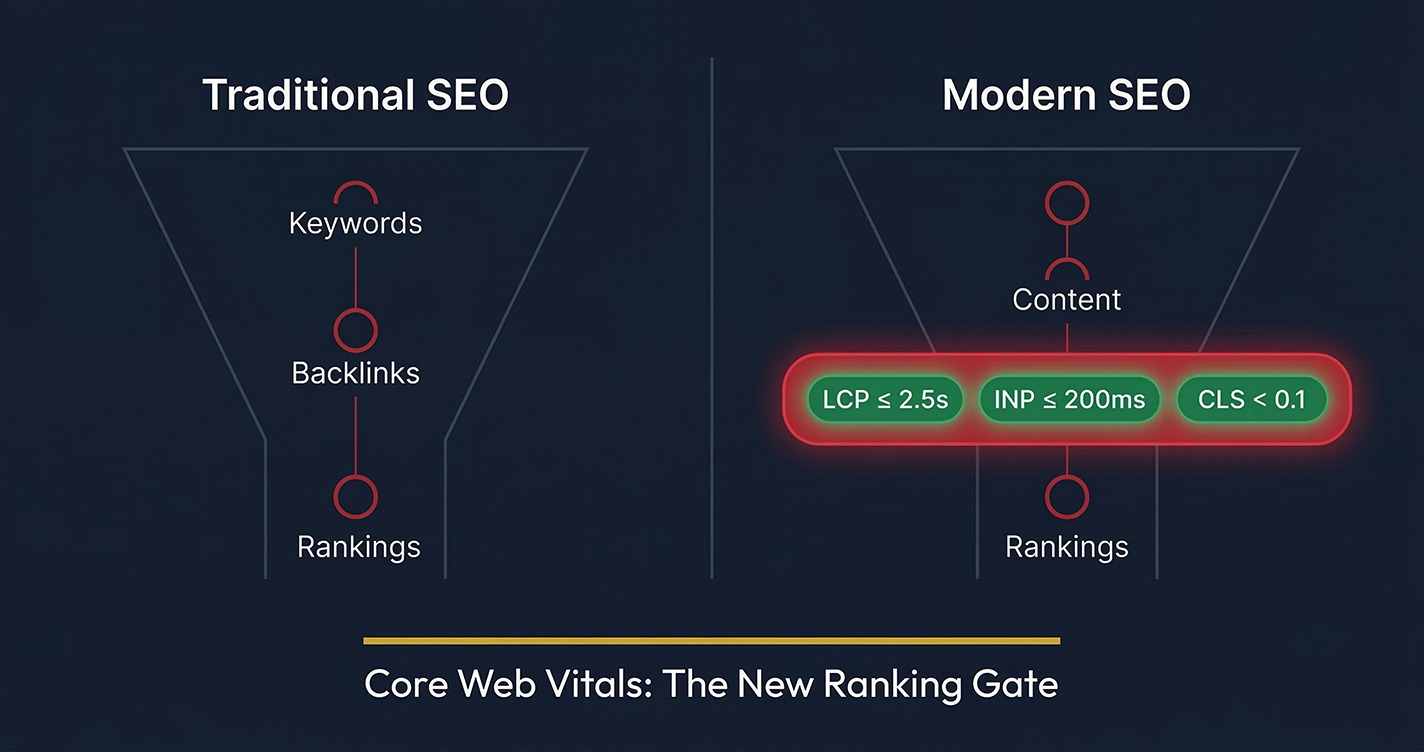
In 2021, Google officially integrated Core Web Vitals into its ranking algorithm. Websites that fail these metrics may see a gradual decline in organic traffic, even if their keyword strategy is otherwise sound.
Performance isn't just about SEO — it's about revenue. A 0.1-second improvement in mobile site speed can increase conversion rates by up to 8.4% for retail sites. Slow pages cost real customers.
+8.4% conversions per 0.1s improvementMeasures how long it takes for the largest image or text block to become visible. It's the moment users feel the page has actually "loaded."
Measures responsiveness — how long it takes for the site to react when a user clicks a link or taps a button. Your site should feel instantaneous.
Measures visual stability — how much the page layout unexpectedly shifts. Ever tried to click "Cancel" only for a late-loading ad to move the page and hit "Buy Now"? That's a poor CLS.
Core Web Vitals are a tie-breaker, not a silver bullet. They form the technical floor your site must clear. Our full AI & Search Engine Optimization strategy layers content authority, entity signals, and GEO on top of this foundation.
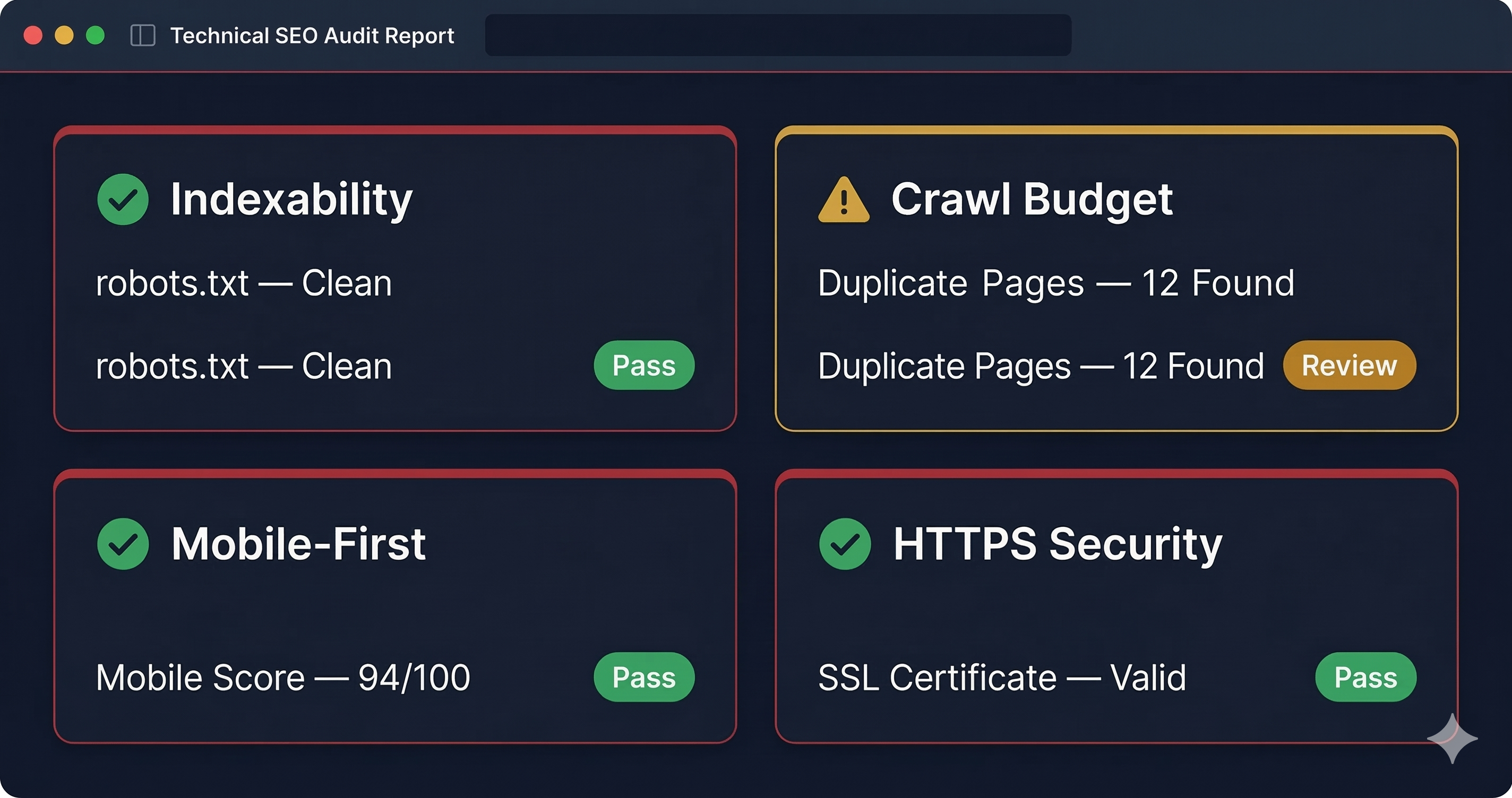
A Technical SEO audit is a comprehensive health check for your website. It identifies "silent killers" — issues that prevent search engines from reading your site without ever showing an obvious error to you or your team. Running one regularly is one of the most high-leverage activities in any Core Web Vitals optimization strategy.
Can Google actually find your pages? We check for robots.txt errors, broken "noindex" tags, and orphaned content that never gets crawled.
For larger sites, ensuring Google doesn't waste its crawl budget on duplicate or low-value pages is critical for keeping priority content indexed fast.
Google now primarily uses the mobile version of your site for indexing and ranking. If your mobile experience is slow or broken, your desktop rankings will suffer.
A non-secure site is an immediate red flag for both Google and your customers. HTTPS is a baseline technical requirement, not a bonus.
Convert images to WebP format to dramatically reduce file size without visible quality loss — a direct fix for poor LCP scores.
Ensure images below the fold only load when the user scrolls to them, reducing initial page weight and speeding up perceived load time.
Strip unnecessary characters from your code files. Smaller files transfer faster, directly improving both LCP and INP scores.
Ensure the top of your page loads first. This satisfies the LCP requirement and gives users instant visual confirmation the page is loading.
A CDN serves your site from servers closest to the user's location — a fast win for globally distributed audiences and a significant LCP booster.
Always set explicit width and height on image elements. This is one of the most effective and overlooked Cumulative Layout Shift (CLS) fixes available.
A medium-sized e-commerce brand underwent a rigorous Core Web Vitals optimization project. The numbers tell the story clearly.
Failing Google's threshold. Slow server response and 400+ unoptimized product images were primary culprits.
Server-side caching, compressed images, and pre-loaded key fonts brought load time well inside the "Good" range.
Organic traffic growth within 90 days. Bounce rate dropped from 65% to 48% — a direct revenue impact.
Technical SEO is a moving target. Don't let slow load times or invisible crawl errors undermine your marketing investment. Matrix 2 Advertising provides deep-dive Technical SEO audits with a clear roadmap to optimize your Core Web Vitals and drive measurable growth. This is one part of our full AI & Search Engine Optimization services.